Who can open the server room right now?
Every site keeps its own list in its own access system. Putting 1 answer together usually takes days.
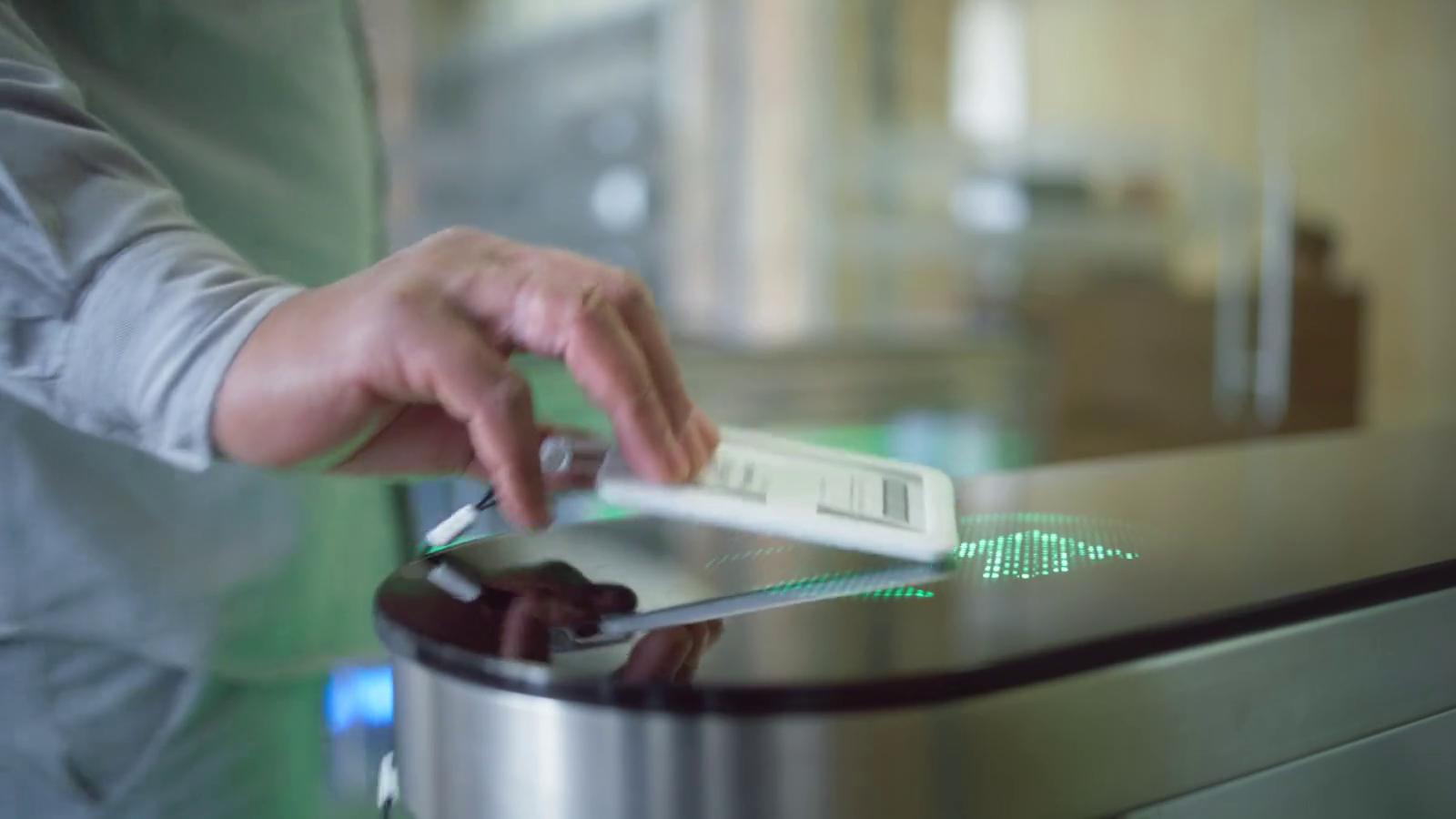
Contractors, cleaners, engineers and visitors come and go every day. We give each of them 1 record, access for as long as they need it, and a trail your auditor can follow.
One Identity. One Credential. Total Control.
If you hesitate on 2 of them, it's worth a call.
Every site keeps its own list in its own access system. Putting 1 answer together usually takes days.
Contractors and agency staff often outnumber your own people. Their access tends to live in mailboxes and spreadsheets.
Several card types still in daily use were cracked years ago. Replacing them feels like a project nobody wants to own.
Your readers, doors and access control stay where they are. We add 1 layer that decides who gets in, records why, and tells each system what to do.
6,000badges swapped
6,000 badges swapped at the machine in a few weeks.
The old badge collected, the new one printed, personalised and encoded to MIFARE DESFire EV3, without anybody at a desk.
4,000badges re-coded
4,000 badges printed and coded to a new DESFire key while the site moved from one system to another.
Handheld scanners stayed in sync, and a badge could be checked anywhere during the change.
1,000+contractors a month
More than 1,000 contractors a month.
Identity read, the site's own policy checked, badge issued, all of it at the terminal on arrival.
Named references are shared under a non-disclosure agreement.
Most suppliers look after either identities or cards. We look after both. You deal with 1 contract and 1 team.
Who they are, why they're here, and when that ends.
A card, a phone or a wallet: whatever they carry.

Auditors rarely ask whether you have a policy. They ask you to show it worked last Tuesday.
Evidence first
None of them mention badges. All of them want to know who had access, who approved it and when you last checked.
| The regime | What it asks of physical access | What you show the auditor |
|---|---|---|
| NIS2Essential & important entities | Physical access to the facilities that house your network and information systems is part of the required risk-management measures. Management is personally accountable for them. | Who held access to the server rooms and OT zones, who approved it, and the date it was last reviewed. |
| DORAFinancial entities & their ICT suppliers | Physical and environmental protection of ICT assets, extended to the third parties who work on them. | Contractor access to data halls, time-bound, approved by a named owner and closed on exit. |
| ISPSPort facilities & terminals | Restricted areas defined, identity verified for everyone entering, and records kept per the facility security plan. | Who entered which restricted zone, on which credential, and that the credential was valid at that moment. |
| Food defenceIFS · BRCGS · FSMA IA | Areas restricted to authorised persons, with contractors and visitors controlled at the identified vulnerable points. | Zone-level restriction per person, and contractors pre-qualified before they ever reach the floor. |
Ports, plants, hospitals, data centres. Pick yours and walk through a typical day on site.

Every call, every crew, accounted for

Only trained people, inside the unit

Provable access, rack by rack

A pass that cannot outlive its reason

One identity, every base

Authorised persons only, and provably

Hundreds of sites, one way in

Supplier access, on the record

A whole cohort moves, and access follows

A network with nobody standing by

Unmanned sites, provable entry

Access data is personal data about your workforce. You should know who holds it, and where.
You judge something that runs on your own site. Your access systems and readers stay where they are. If it earns its place, we extend it site by site.
One siteOne populationYour readers stay
PIAM is the governance layer above physical access control. Instead of administering doors and groups in each access control system, you hold one identity record per person. It says who they are, why they are on site, and when that reason ends. And the access systems receive the resulting decisions. The approval, the reason and the record move one layer up.
No. Nothing is replaced. Axxession is added above the systems you already run, across installations of more than one manufacturer. 7 access control systems are integrated today, as working integrations, not certified ones. Each system keeps operating as it does today and receives decisions from the governing layer.
We start with 1 site and 1 population. A local integrator partner delivers it, with our engineering behind them. You judge something that runs on your own site before anything is extended.
Hosted in European Union data centres. No parent or shareholder outside the EU; your contract is with a Belgian entity, governed by Belgian law. People data is read at source rather than copied into a second workforce database. Most of your workforce data is never held by us at all.
Most commonly NIS2, DORA, the ISPS Code and food defence standards such as IFS and BRCGS, alongside customer contracts, ISO 27001 and SOC 2. None of these regimes mention a badge; all of them end up asking who held access, who approved it, and when it was last reviewed. The platform produces those records, ready when an auditor asks. Compliance itself also depends on your own policies and controls.
Yes, and that is unusual in this market. The same record that grants the access issues the credential, card, mobile or wallet. A whole card base can then move onto newer technology on a dual-technology card. There is no re-badging campaign, and every legacy badge is accounted for.